
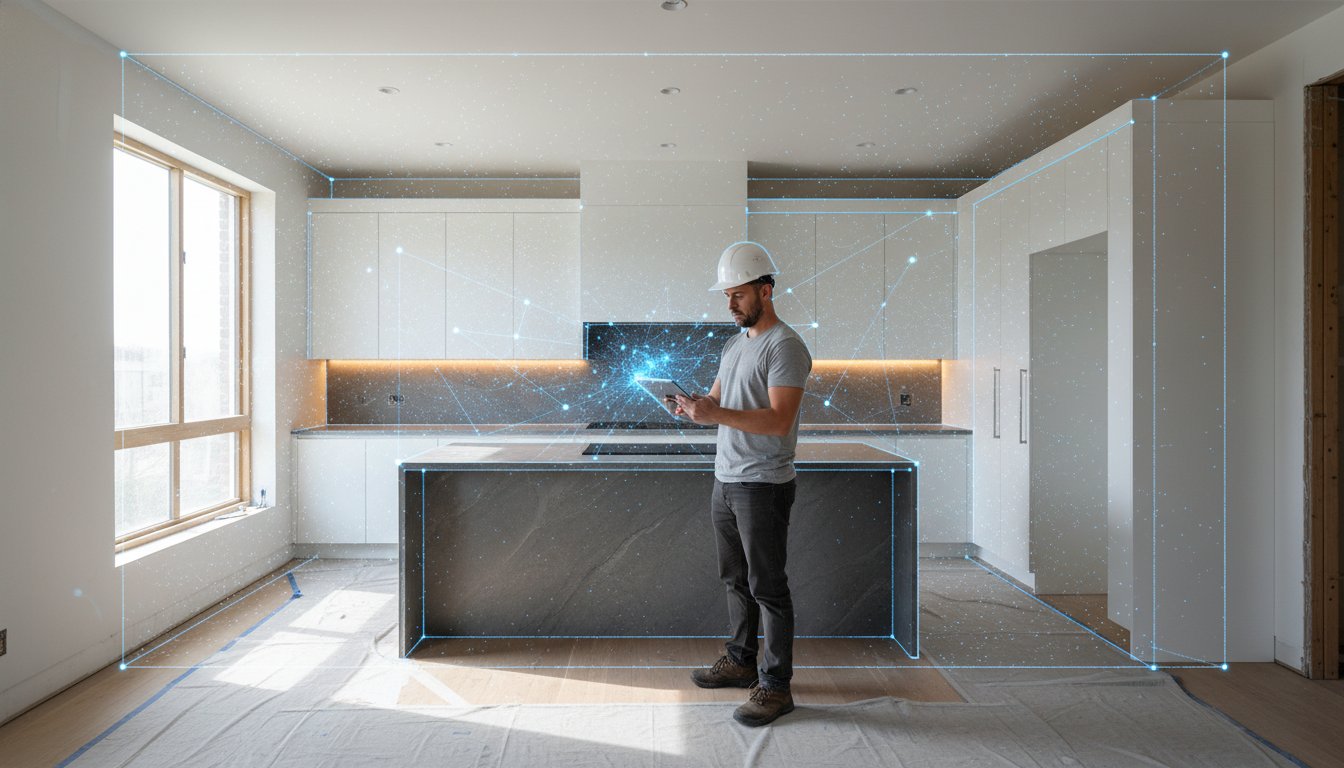
Your tape measure is the reason you're losing your Saturdays to CAD drawings and cabinet re-orders. Stop paying for manual mistakes with your free time. Every contractor knows the frustration of a 1/4-inch error that ruins a custom install. You also know the pain of clients losing interest while they wait days for a layout. One of the primary benefits of LiDAR for kitchen contractors is the ability to turn a physical room into a perfect digital twin in seconds. This technology can reduce overall project duration by up to 30 percent. It turns a complex site visit into a streamlined digital process.
You want more time in the field and less time at a desk. We agree that manual floor plans are a bottleneck for your business. This article reveals how LiDAR technology eliminates measurement errors, slashes design time, and helps you close deals on-site. We'll show you how to use mobile tools like ArchKit Design to create instant 3D visualizations that impress clients before you leave the driveway. We are exploring the 2026 workflow that turns your smartphone into a high-precision design studio. Get ready to modernize your trade and reclaim your weekends.
Key Takeaways
- Replace manual measurements with laser-accurate digital twins. Capture every dimension in seconds and stop the hour-long tape measure struggle.
- Leverage the benefits of LiDAR for kitchen contractors to identify out-of-square walls instantly. Eliminate filler strip guesswork and prevent costly cabinet re-orders.
- Win more bids with high-impact AR visualizations. Show clients their new kitchen layout during the very first walkthrough to build immediate trust.
- Reclaim your weekends by moving the design process to the field. Use mobile tools like ArchKit to generate 3D layouts on-site and bypass the office-dependent drafting phase.
- Modernize your workflow with a simple two-step scanning process. Go from a physical site survey to a professional digital model in minutes, not days.
Understanding LiDAR: Why Kitchen Contractors Are Ditching the Tape Measure
LiDAR stands for Light Detection and Ranging. It's a technology that uses rapid laser pulses to map out a physical space with surgical precision. By Understanding LiDAR and how it functions, you can see why it has become the standard for high-performance remodeling. Instead of a single distance measurement, the sensor captures millions of points of data to create a "digital twin" of the kitchen. This is a perfect, 3D replica of the room that lives on your mobile device. It isn't just a sketch; it's a data-rich environment you can interact with.
For contractors, the primary shift is in the "Point Cloud." Think of this as a dense 3D map where every surface, outlet, and plumbing stub is recorded as a specific coordinate. In the past, capturing this level of detail required $20,000 scanners mounted on heavy tripods. Today, the hardware is already in your pocket. Using an iPhone Pro or iPad Pro, you can capture a full kitchen layout in under 60 seconds. This is a massive leap from the 45 minutes spent fumbling with a tape measure, a ladder, and a notepad. You walk the room, scan the walls, and the data is ready.
The End of the Manual Error Era
Manual measurements are the silent killers of your profit margins. One missed dimension or a misread number leads to cabinet re-orders and weeks of project delays. One of the biggest benefits of LiDAR for kitchen contractors is the simultaneous capture of every plane. It doesn't just measure the distance between two walls. It captures ceiling heights, floor levelness, and wall plumbness all at once. You'll know if a corner is 88 degrees instead of 90 before you even start the design phase. In 2026, a 1/8-inch measurement error is a choice, not an accident. High-accuracy scans ensure that custom cabinetry fits the first time, every time.
LiDAR vs. Digital Tape Measures
Many pros still rely on digital tape measures. These are better than steel tapes, but they still require manual data entry. You take the shot, read the screen, and write it down. This is where human errors creep into the workflow. LiDAR is fundamentally different because it captures the entire environment in context. It can "see" around clutter, existing furniture, and messy jobsites to find the true wall surface. This context is vital for accurate planning. To get started, you can learn how to use LiDAR room mapping to streamline your initial site visits. Tools like ArchKit integrate this data directly into your mobile workflow, turning raw scans into actionable layouts instantly. You stop being a data entry clerk and start being a builder again.
What is LiDAR Used for in Construction? 5 Game-Changing Applications for Remodelers
What is LiDAR used for in construction when you're dealing with residential kitchens? For most pros, it's about eliminating the "return trip." You know the drill. You get back to the office, start your drawing, and realize you forgot to measure a window casing or the exact height of a gas line. LiDAR solves this by capturing every detail in one pass. It creates a high-fidelity as-built document that serves as your project foundation. You capture the space once and never have to go back for a missed dimension.
One of the biggest benefits of LiDAR for kitchen contractors is the speed of site surveys. You can move from one lead to the next with total confidence. You aren't just taking pictures; you're taking data. This data helps with clash detection before a single cabinet is ordered. You'll see exactly where a new drain line might hit an existing floor joist or where a vent hood will conflict with a structural beam. Catching these issues on day one saves thousands in labor and rework.
Instant Floor Plan Generation
When you scan a room, you aren't just getting a raw file. Modern mobile apps turn that scan into a 2D floor plan and a 3D model automatically. You stop walking the site and start designing the site while you're still standing in the client's home. This allows you to hand off accurate files to your electrician or plumber immediately. There's no waiting for a weekend drafting session. The benefits of LiDAR for kitchen contractors extend to every phase of the project, from the first lead to the final walkthrough.
Structural and Mechanical Mapping
Kitchens are complex machines. Mapping existing soffits, electrical outlets, and gas lines is critical for a smooth install. These Game-Changing Applications for Remodelers allow you to identify obstacles that are often hidden from the naked eye. You won't face a surprise wall during demolition because you've already verified the dimensions and locations of every mechanical element. It's about seeing through the clutter to find the true structure of the room.
This level of detail integrates perfectly into mobile platforms. You can use this data to start layout planning on the fly. If you want to see how this works in a real-world environment, you can get early access to our design tools. Having this data on your phone means you can answer client questions about island placement or appliance clearance with 100 percent certainty. It makes you the most prepared professional in the room.
Solving the Cabinetry Crisis: How LiDAR Ensures a Perfect Fit Every Time
Cabinetry is the most expensive line item in any kitchen remodel. A 1/4-inch mistake isn't just a minor annoyance; it's a financial disaster. Traditional measuring often ignores the "filler strip" problem. You measure at the floor. You measure at the ceiling. The numbers rarely match. If you order based on a single tape measurement, you're left with massive gaps or oversized fillers that ruin the aesthetic. You waste space and compromise the finish. LiDAR eliminates this guesswork by capturing the entire wall surface in a high-density point cloud.
Old houses are never square. One of the primary benefits of LiDAR for kitchen contractors is the ability to verify wall angles with absolute certainty. LiDAR catches that 89.2-degree corner before the cabinet order goes out. This level of precision is highlighted in a comprehensive review of LiDAR technology, which confirms its role in ensuring high-quality as-built models. You see the true geometry of the room. You stop hoping for a square corner and start planning for the reality of the site. You order exactly what fits the digital twin, reducing material waste and protecting your margins.
Precision for Custom and Stock Cabinetry
Tight clearances leave zero room for error. If your design includes appliance garages or floor-to-ceiling pantries, you need sub-millimeter accuracy. You can find the best app to measure kitchen for cabinets to ensure your layout is flawless from the start. Align sink bases and dishwasher openings with existing rough-ins while you're still on-site. You won't need to perform expensive field modifications that eat your profit. The benefits of LiDAR for kitchen contractors mean your custom pieces arrive ready for a perfect install.
Automated Cut Lists and Estimating
ArchKit takes this data further by integrating standard U.S. cabinet sizes directly onto the scan. The software uses the LiDAR data to generate accurate cabinetry layouts in minutes. You reduce the exhausting back-and-forth with manufacturers and sales reps. You provide a "measure once, order once" experience that builds professional authority. This workflow moves you from a messy site survey to a clean, digital order list without ever picking up a pencil. It's about speed, accuracy, and the satisfaction of an install that fits the first time.
The Business Case: Saving Hours on Site and Winning More Bids
In 2026, the "Instant Bid" is the new industry standard. If you leave a site visit without a layout and a rough estimate, you're already behind. One of the most powerful benefits of LiDAR for kitchen contractors is the ability to close deals before you even leave the driveway. You move from being a contractor with a tape measure to a tech-forward professional who provides immediate value. This speed doesn't just save you time; it creates a massive psychological advantage. Clients are more likely to sign when the excitement of the consultation is still fresh. You stop being a commodity and start being a partner.
Eliminating "office weekends" is the biggest quality-of-life upgrade you'll experience. Traditionally, you'd spend four to eight hours converting hand-drawn sketches into CAD models on a Sunday night. With LiDAR, the scan becomes the model. You convert physical reality into a digital environment in minutes. This shift allows you to manage more leads without increasing your administrative burden. You spend your time building projects, not drawing them. This efficiency can lead to a 30 percent reduction in overall project duration, which means you get paid faster and move to the next job sooner.
Streamlining the Design Approval Process
Visualizing a new kitchen is difficult for most homeowners. They can't see the island placement or the cabinet flow from a flat 2D sketch on a piece of paper. Using a 3D kitchen visualizer for professionals allows you to project a full-scale model into their actual room. ArchKit makes it easy to swap cabinet styles or move appliances on the fly. You get an immediate "yes" on the layout because the client can see exactly what they're buying. This visual clarity cuts through the long approval cycles that often stall projects for weeks.
Calculating the ROI of LiDAR Adoption
Think about the cost of a single misordered cabinet. The shipping, the restocking fee, and the two-week delay often cost more than an entire year of professional software. The benefits of LiDAR for kitchen contractors are clear when you look at the bottom line. You save hours of drafting time per project and eliminate the rework caused by manual measurement errors. It’s a small investment that pays for itself on the very first job you close. Ready to modernize your workflow and reclaim your time? Get early access to ArchKit’s LiDAR tool and start winning more bids today.
Implementing Mobile LiDAR: From Site Survey to 3D Layout in Minutes
Transitioning from a traditional tape measure to a mobile-first workflow is simpler than most pros realize. You don't need a degree in engineering to operate these tools. You just need the right hardware and a logical sequence. The primary benefits of LiDAR for kitchen contractors are found in the immediate, on-site results. This process moves you from a raw space to a professional design before you finish your first cup of coffee on the jobsite.
Follow these five steps to master the mobile LiDAR workflow:
- Step 1: Prep the site. Remove major obstructions like large boxes or loose debris. LiDAR is forgiving and can "see" through some clutter, but hitting the baseboards directly ensures the most accurate floor-to-wall transitions.
- Step 2: Launch your software. Open a dedicated tool like ArchKit on your iPhone Pro or iPad Pro. These devices are built for this specific task.
- Step 3: Scan the perimeter. Walk the room slowly. Capture the walls, windows, doors, and ceiling. You'll see the 3D "digital twin" forming on your screen in real-time.
- Step 4: Build the layout. Overlay standard U.S. cabinet sizes directly onto your scan. You can adjust island placement or appliance clearances while standing in the physical kitchen.
- Step 5: Export and share. Generate a 2D floor plan or a 3D model. Send it to your cabinet shop or the client immediately.
Hardware Requirements for 2026 Contractors
The iPad Pro remains the gold standard for on-site scanning. Its large screen makes it easier to manipulate 3D models and show visualizations to clients. However, you must ensure your device is "Pro" grade. Standard iPads and older iPhones lack the active LiDAR sensors required for high-precision mapping. You can check the best iPad Pro LiDAR scanner apps for contractors to see which hardware and software combinations fit your specific project scale. Using the right gear ensures you capture those critical 1/8-inch details every time.
Integrating LiDAR into Your Current Workflow
LiDAR isn't a replacement for your expertise; it's an accelerator. Use ArchKit as the bridge between the messy reality of a demolition site and a clean digital estimate. One of the main benefits of LiDAR for kitchen contractors is how it feeds directly into your cabinet list and material orders. You stop guessing and start ordering with total confidence. This workflow eliminates the administrative fatigue that kills your productivity. Stop living in the office and start spending more time in the field. Join the future of contracting and get early access to ArchKit today.
Master the Modern Jobsite: Take Control of Your Kitchen Projects
The tape measure era is over. You've seen how digital twins and mobile workflows replace hours of manual drafting with seconds of laser precision. By embracing the benefits of LiDAR for kitchen contractors, you eliminate the risk of misordered cabinets and the exhaustion of office-bound weekends. You now have the power to turn a messy demolition site into a finalized design before the client even offers you a cup of coffee. It’s about more than speed. It's about professional authority and project profitability.
Stop letting 1/4-inch errors eat your margins. You can eliminate measurement errors and generate 3D layouts on-site with a tool designed specifically for your trade. ArchKit gives you a standard U.S. cabinet catalog to build accurate designs in real-time. This is the competitive edge you need to close more deals and finish every install with surgical precision. The future of remodeling is already in your pocket. It's time to use it. Get Early Access to ArchKit: The LiDAR-Powered Kitchen App and start building with total confidence today.
Frequently Asked Questions
What is LiDAR used for in construction specifically for small remodelers?
LiDAR is used for rapid as-built documentation and site surveys. It allows a small remodeler to capture a complete 3D map of a kitchen in seconds. This data serves as the foundation for the entire design process. You use it to identify wall plumbness, ceiling height variations, and the exact placement of mechanical rough-ins without spending an hour with a tape measure.
Do I need expensive equipment to use LiDAR for kitchen design?
No, you don't need a $20,000 terrestrial scanner for residential kitchen projects. Most modern contractors use the mobile devices they already own. Pro-grade smartphones and tablets, like the iPhone Pro or iPad Pro, have built-in LiDAR sensors. These handheld devices provide the precision needed for interior remodeling at a fraction of the cost of industrial surveying gear.
How accurate is LiDAR compared to a manual tape measure?
LiDAR is significantly more reliable than a manual tape measure because it eliminates human interpretation and data entry errors. While a high-end tape is accurate, the person reading it might misread a mark or write down the wrong number. LiDAR captures millions of data points simultaneously. This density ensures that your digital model matches the physical reality of the room with high-velocity precision.
Can LiDAR see through walls or cabinets?
LiDAR cannot see through solid objects like drywall, studs, or existing cabinetry. It uses laser pulses that reflect off visible surfaces. If you need to map a wall behind a pantry, you'll need to open the doors or wait until demolition. However, it's excellent at "seeing" through jobsite clutter to find the true surface of a floor or wall without moving every piece of furniture.
Is LiDAR scanning difficult to learn for non-tech-savvy contractors?
LiDAR scanning is very intuitive and requires almost no technical background. The process is similar to taking a panoramic photo or a video. You simply walk the perimeter of the room while the app maps the space. One of the primary benefits of LiDAR for kitchen contractors is that tools like ArchKit handle the complex data processing automatically, leaving you with a clean 3D layout.
What are the best mobile devices for LiDAR scanning on a job site?
The iPad Pro and iPhone Pro series (12 Pro and newer) are the best choices for on-site scanning. These "Pro" models contain the specific hardware sensors required for active depth sensing. The iPad Pro is often preferred by remodelers because the larger screen makes it easier to verify the scan and overlay cabinet designs while still standing in the client's kitchen.
How does LiDAR help with kitchen cabinet installation?
LiDAR helps with installation by identifying out-of-square corners and uneven floors before the cabinets are even built. You'll know exactly where a wall bows or where a floor slants. This allows you to order the correct filler strips and shims in advance. One of the benefits of LiDAR for kitchen contractors is the "measure once, install once" workflow that prevents expensive field modifications.
Can I export LiDAR scans to other CAD software?
Yes, you can export your scans and layouts to industry-standard formats. Most mobile LiDAR apps allow you to save files as .OBJ, .PLY, or .DXF. This ensures that the data you capture on-site can be used in your preferred desktop drafting software or shared directly with cabinet manufacturers. It creates a seamless link between the physical jobsite and the final production phase.


